
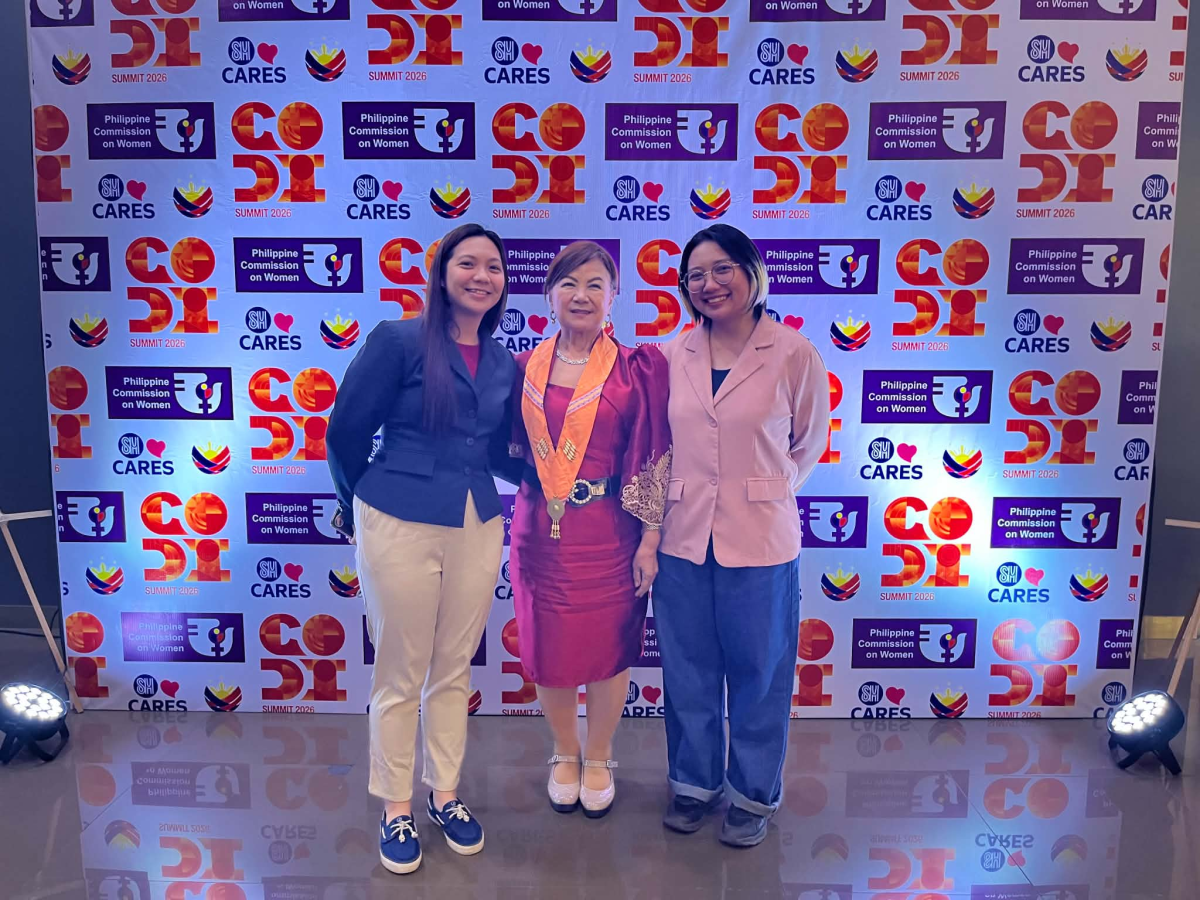
The Chairperson of the Philippine Commission on Women, Ermelita V. Valdeavilla (middle), together with the staff from the UP Open University’s Office of Gender Concerns, takes a photo during the 1st CODI Summit.
The University of the Philippines Open University (UPOU), through its Office of Gender Concerns (OGC), strengthened its continuing commitment to gender mainstreaming and the development of safe, inclusive, and gender-responsive institutional mechanisms through its participation in the first-ever Committee on Decorum and Investigation (CODI) Summit 2026 organized by the Philippine Commission on Women (PCW) on 13 August 2026.
With the theme “Tindig Babaylan, Pang-aabuso’y Wakasan!,” the summit served as a multi-sectoral platform for assessing the current state of CODI implementation, surfacing lived experiences and institutional practices, and identifying actionable steps to strengthen CODI systems nationwide.
The summit brought together representatives from different sectors involved in Gender and Development (GAD), human resource management, institutional policy, and mechanisms in addressing sexual harassment and other gender-based concerns. Discussions shifted from policy and institutional frameworks to lived experiences, good practices, innovations, and concrete commitments to action.
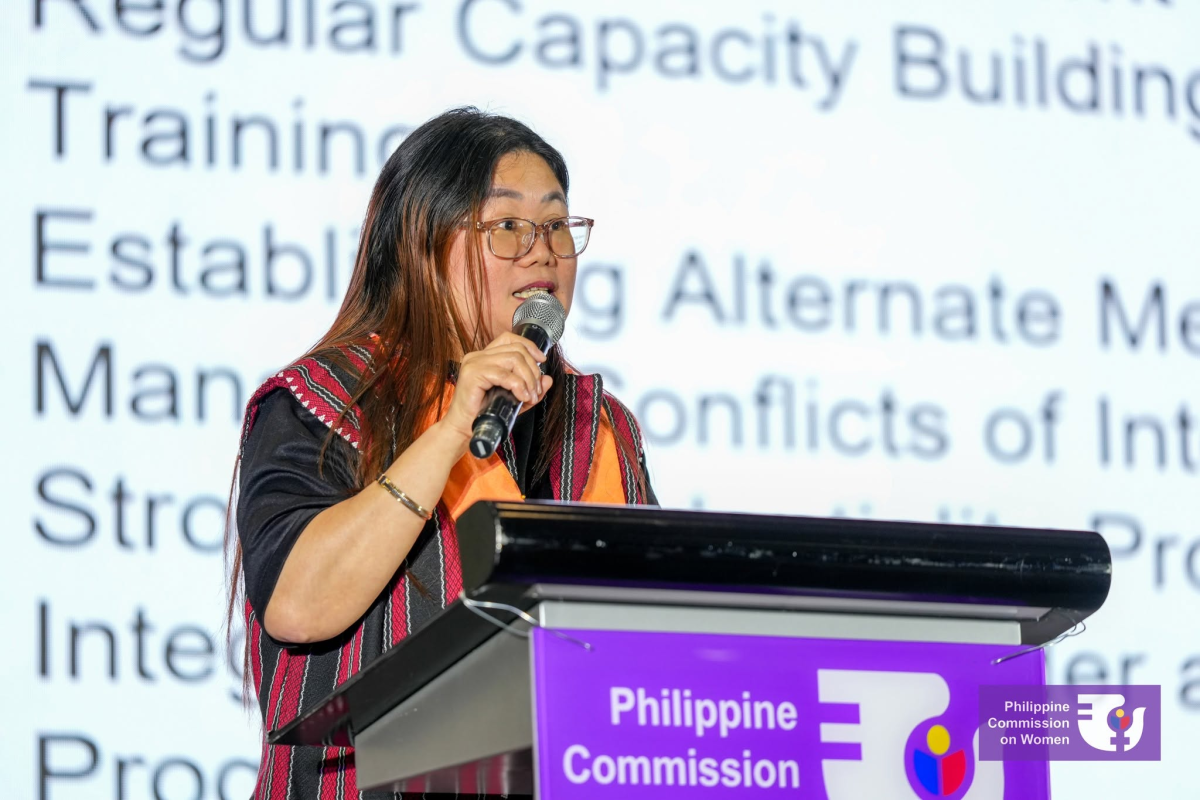
Dr. Melanie Reyes sharing good practices and innovations across sectors to strengthen CODI mechanisms (Photo credit from the Philippine Commission on Women’s Facebook post)
A notable highlight of the summit was the participation of Dr. Melanie Reyes, Executive Director of the Miriam College Women and Gender Institute (WAGI) and a senior lecturer of the UPOU, who served as one of the invited speakers of the PCW. Dr. Reyes shared good practices and innovations across sectors to strengthen CODI mechanisms.
Dr. Reyes’ participation also highlighted the contribution of the Diploma in Women and Development (DWD) Program of the UPOU Faculty of Management and Development Studies (FMDS) to the broader field of gender and development. As a lecturer of the UPOU DWD Program, Dr. Reyes brings extensive academic and professional experience in women, gender, and development to the program and to national conversations on gender-responsive institutional practice.
The participation of a DWD lecturer in a national platform such as the CODI Summit demonstrates the program’s strong connection between academic learning, gender research, professional practice, and policy engagement. It reflects the program’s commitment to preparing practitioners and advocates who can critically examine gender issues and contribute to transformative institutional and development practices.
For UPOU OGC, these discussions provided valuable insights to inform the University’s ongoing work on gender mainstreaming and institutional mechanisms for addressing gender-based concerns. The exchange of practices across sectors also reinforces the importance of ensuring that policies are translated into systems that are functional, accessible, responsive, and trusted by members of the University community.
The summit provided UPOU more than an opportunity to participate in a national gathering. It reinforced the importance of continuous capacity building, evidence-informed practice, and collaboration in advancing gender mainstreaming within the University.
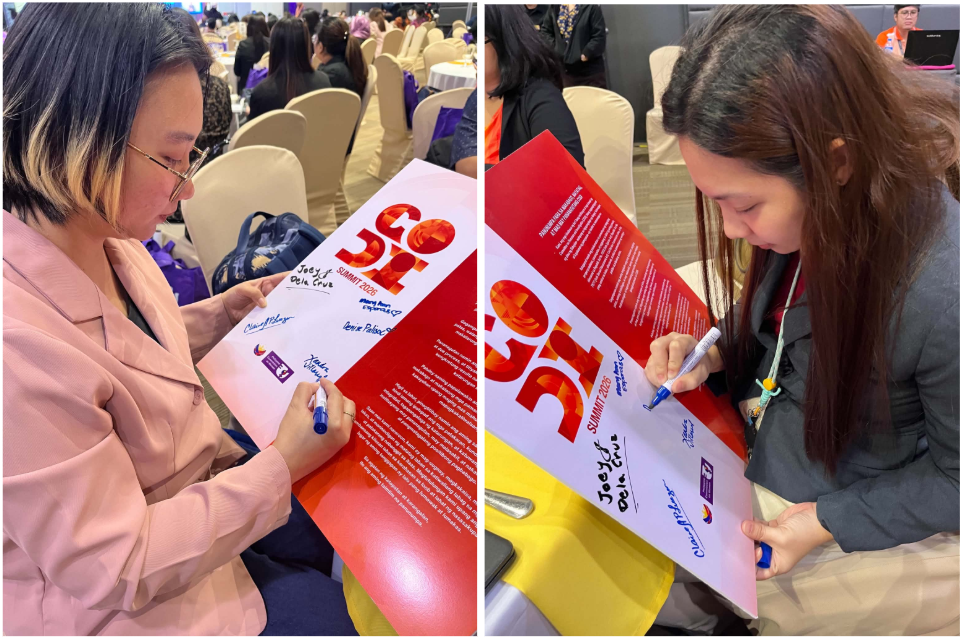
Representatives from the UPOU OGC reaffirm their commitment through the signing of the “Panunumpa para sa Makabago, Makatao, at mas May Pananagutang CODI.”
Through the OGC, FMDS, and the DWD Program, UPOU remains committed to advancing gender mainstreaming not only through policies and programs, but also through knowledge generation, capacity building, professional practice, and meaningful engagement with national gender-responsive initiatives.
The CODI Webinar and Summit 2026 thus served as both a learning opportunity and a reminder of the continuing work required to build institutions in which gender mainstreaming is embedded in everyday practice.
Written by: Denise Therese Anne A. Palisoc | Edited by: Maria Lourdes T. Jarabe, Anna Cañas-Llamas, Xandra Marie G. Villareal